


Description: The Jipelec JetFirst 200 (also known simply as the RTA JetFirst 200) is a compact, robust Rapid Thermal Processing (RTP) and Rapid Thermal Annealing (RTA) system widely used in research and development (R&D) for semiconductor and microfabrication applications. It is a bench-top, cold-wall reactor that uses high-intensity halogen lamps to heat samples rapidly.
Features:
Wafer size: Up to 200 mm (8 inch)
Temperature range: Ambient → 1200 °C
Heating rate: 1 °C/s to 200 °C/s
Uniformity: ±1 °C (typical)
Control modes: Thermocouple (to 1000 °C atm / 800 °C vacuum) and optical pyrometer (500–1200 °C)
Process atmospheres: N₂, O₂, NH₃, forming gas, vacuum
Gas handling Up to 4 gas lines with MFCs
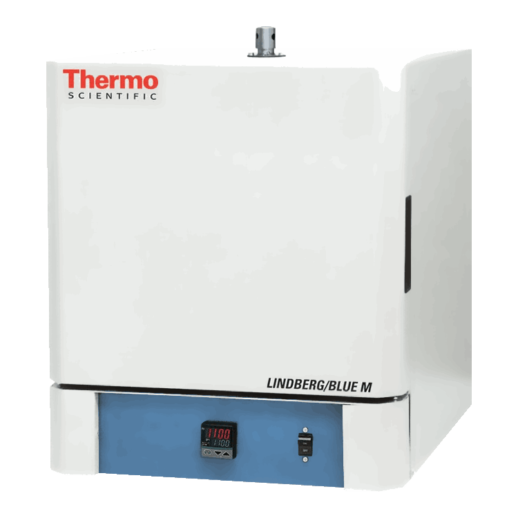
Tool: Linderg blue M, Thermo scientific
Description:
The Lindberg/Blue M brand by Thermo Scientific refers to a line of high-temperature laboratory furnaces and ovens, such as box and tube furnaces, that are designed for industrial and lab applications. They are known for their unique Moldatherm insulation and double-wall construction, which provide efficient, uniform heating with low exterior temperatures. Key features include microprocessor-based PID temperature control for accuracy and safety, adjustable high-limit overtemperature protection, and energy-efficient designs that allow for quick heat-up and cool-down cycles.
- Temperature range: 100 °C to 1100 °C
- Uniformity: ±2.0 °C (at ~1100 °C)
- Capacity / Chamber Volume: 18.4 L (≈0.65 cu ft)
- Control / Programming:
Single-program mode with multiple segments (e.g. 8 segments)
Multi-program / multi-segment versions also exist (5 programs, 16 segments)
Over-temperature protection built in (OTP)
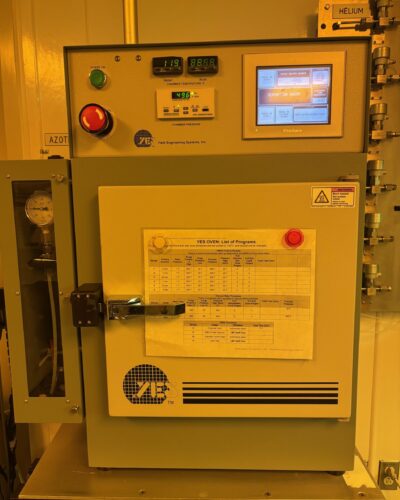
Tool: Dehydration Oven, YES
Description: The YES oven is a high-temperature, computer-controlled system designed for precision processing of silicon wafers and other substrates. Its key function in dehydration is to remove both surface moisture and chemically bound water molecules from the wafer surface before applying photoresist
- Process temperature: 150 °C
- Vacuum range: 400 mTorr
- Process gases: Nitrogen for purging cycles and HMDS as the process vapor.
- Dehydration Method: Achieved through a combination of heat (around 150°C) and vacuum cycles (evacuation and Nitrogen backfill) to remove all moisture from the substrate surface.
- HMDS Application: The HMDS is applied in vapor phase to form a hydrophobic monolayer, which improves photoresist adhesion
- Wafer Capacity: Ranges from single wafers to multiple cassettes
Description:
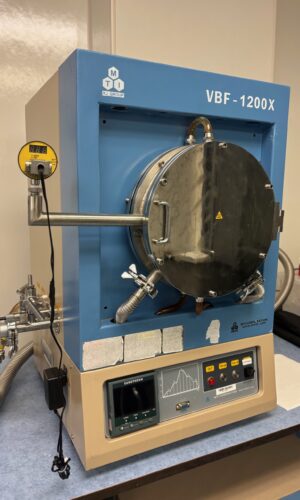
The VBF-1200X models are laboratory-scale furnaces that feature a double-layer steel casing with air cooling to maintain a safe surface temperature, high-purity alumina fiber insulation for energy efficiency, and a programmable temperature controller. They are equipped with water-cooled stainless steel vacuum flanges and a quartz chamber, which allows for operation under vacuum or flowing inert gas conditions.
- Temperature Accuracy: Typically ±1°C
- Max temperature: 1100°C (≤30 min), 1000°C continuous
- Max vacuum: 10⁻⁵ Torr with turbopump
- Chamber size: 7.5″ ID x 13.4″ L quartz tube (7.6 L)
Leave a Reply